

Symposium for Gifted Education AU/NZ 2026
About
In today’s classrooms, ethics has become both more urgent and more difficult to teach. Students question assumptions, challenge authority, and expect clarity in areas where none is easily found. For teachers of gifted learners, this presents a particular opportunity—and a particular risk. These students are often bold, quick-thinking, and willing to take intellectual risks; yet without careful guidance, ethical discussions can drift into assertion, emotional reaction, or unexamined opinion.
This year’s symposium responds directly to that challenge. Ethics After Certainty explores how to teach ethics with rigour, clarity, and confidence in a world where disagreement is not a problem to be solved, but a reality to be understood.

Programme
Ethics After Certainty
This masterclass is designed for educators who want to move beyond introductory approaches to ethics and develop greater confidence in teaching one of the most challenging areas of the curriculum. While ethics can often feel abstract or uncertain, it is central to the intellectual life of the classroom—particularly when working with gifted learners.
Bright students are often quick to question, challenge assumptions, and push discussions into complex territory. They are less satisfied with simple answers and more willing to take intellectual risks. This makes ethics both highly engaging and potentially difficult to manage, as discussions can slip into opinion, emotional response, or unresolved disagreement.
This programme offers a clear and rigorous approach to teaching ethics well. Teachers will explore why ethical disagreement is not a weakness but a defining feature of moral thinking, and how different frameworks approach questions of right and wrong. Alongside this, the day provides practical strategies for structuring discussion, selecting effective dilemmas, and sustaining thoughtful inquiry in the classroom.
A highlight of the programme is a live Oxford-style seminar with Professor Daphne Hampson, exploring Kierkegaard’s challenge to reason and ethics on account of faith This session offers a rare opportunity to engage with ideas at the fault line of Western thought, and to experience philosophical thinking at a high level.
By the end of the session, you will feel more equipped to teach ethics with clarity and confidence, and to support your students in developing more precise, disciplined, and intellectually serious moral thinking.
Individual session times may vary but start and finish times will be the same across all centres.
Session 1. Why Ethics Feels Hard — and How to Teach It Well
Why Ethics Feels Hard — and How to Teach It Well
Ethics matters, yet many teachers find it one of the most uncomfortable areas to teach. Discussions slip into opinion, students demand the “right answer”, emotions run high, and teachers worry about imposing views or closing debate too quickly.
This extended, highly interactive session tackles both the problem and the practice of teaching ethics. Teachers first explore why ethical disagreement is not a failure of reasoning but a defining feature of ethical thinking; why ethical frameworks clash rather than converge; and why “teaching values” alone cannot resolve moral conflict. The session also surfaces the often-unnoticed Enlightenment assumptions that shape how ethics is approached in modern classrooms.
Building on this foundation, teachers then focus on classroom craft: how to choose ethical dilemmas that genuinely stretch thinking; how to prevent discussions collapsing into opinion, emotionalism, or premature moralising; and when — and whether — a teacher should disclose their own view. Ethics is reframed not as a problem to be solved, but as an inquiry to be sustained.
Participants leave with a practical ethical question bank, concrete facilitation strategies, and renewed confidence to lead thoughtful, rigorous ethical discussions.
An essential foundation for teachers who want to teach ethics with clarity, depth, and intellectual honesty — and preparation for deeper engagement with ethics.
Break
Session 2. What Happened when The Foundation Stone of Western Civilisation met the 1960’s?
Natural Law vs Situation Ethics
Christian ethics has profoundly shaped Western moral thinking, yet in contemporary classrooms it often feels contested, awkward, or difficult to teach well. Appeals to Scripture, conscience, Church authority, and moral law sit uneasily alongside modern assumptions about autonomy, rational consensus, and individual choice.
This session explores why Christian ethics still matters — not as a single set of answers, but as a rich and internally diverse tradition of moral reasoning. Through concrete, classroom-ready dilemmas, teachers examine contrasting Christian approaches, including Natural Moral Law and Situation Ethics, and consider how each understands moral authority, conscience, reason, love, and moral limits.
Rather than smoothing over disagreement, the session foregrounds it. Participants explore key tensions within Christian ethics — law and compassion, obedience and responsibility, Scripture and interpretation — and consider why these tensions persist. Drawing on thinkers such as Kierkegaard and Bonhoeffer, the session shows why Christianity often resists ethical synthesis, and why this resistance can be intellectually honest rather than a weakness.
Throughout, the focus is on how to teach Christian ethics rigorously and confidently, without indoctrination or reductionism. Teachers leave better equipped to present Christian ethics as a serious moral tradition that invites inquiry, debate, and thoughtful judgement.

Session 3 The Ethics Gym: Training Moral Thinking Through Dilemmas
12:00–12:45
When every option is a problem: right, wrong and really awkward
Ethical reasoning becomes sharper not through abstract theory alone, but through wrestling with real dilemmas. This session invites teachers to explore a sequence of carefully chosen scenarios—ranging from stealing to meet basic needs to breaking confidentiality to prevent harm—that expose the tensions between different approaches.
Rather than searching for quick answers, participants will use these dilemmas to refine the thinking strategies behind ethical judgement: weighing moral limits against compassion, distinguishing emotional response from rational evaluation, and recognising the moral cost present in genuine dilemmas. By the end, teachers will see how structured dilemmas can help students move beyond instinctive reactions and develop more precise, disciplined ethical reasoning—while gaining practical examples they can immediately use in the classroom
Lunch
12:45–13:30

Session 4. Kierkegaard at the Fault Line: Knowledge, Faith and Ethics after the Enlightenment
An Oxford-style seminar with Professor Daphne Hampson
This masterclass explores one of the deepest and most enduring fault-lines in Western thought: the clash between post-Enlightenment modernity and Christian faith. Through the lens of Kierkegaard’s incisive works Fear and Trembling (1843) and Philosophical Fragments (1844) Professor Daphne Hampson examines the challenge that ethics and reason pose for faith.
This is a talk that reaches to the heart of these issues. It is an invitation to think through issues that often remain unexplored, failing to be confronted. In the spirit of the Oxford tutorial tradition, participants are drawn into a rigorous, text-centred exploration of fundamental questions that continue to shape theology, philosophy, and education.
This session offers professional development for teachers who love ideas, value intellectual seriousness, and want to experience what it is like to think at the fault line between competing world views that are still very much alive today.
Practical Resources
Participants will receive an exceptional suite of classroom-ready resources centred on a carefully curated set of ethical dilemmas and practical examples, alongside a powerful ethical inquiry question bank. Developed and refined through previous symposia, these materials are designed to stretch thinking, prevent discussion from collapsing into opinion, and sustain genuine intellectual engagement. Far from being add-ons, they equip you to lead disciplined, high-quality ethical inquiry—keeping thinking open, rigorous, and productively unresolved.
Speakers

Julie Arliss
Director and Founder of Thriving Minds
is a former Cambridge CIE examiner, and a Farmington Scholar at Harris Manchester University of Oxford.
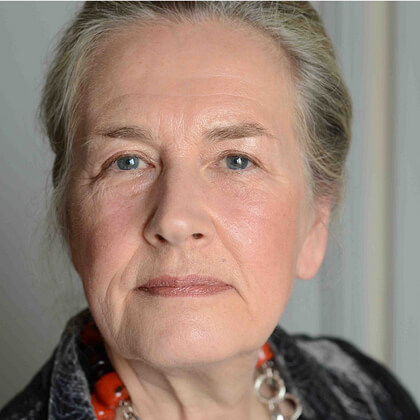
Daphne Hampson
Daphne Hampson is a Systematic Theologian, also interested in Continental Philosophy and Feminist Theory. She has doctorates in Modern History from Oxford, in Theology from Harvard, and a masters in Continental Philosophy from Warwick. Daphne held a personal Chair at the University of St. Andrews in ‘Post-Christian Thought’. In her retirement she is an Associate of the Department of Theology and Religion at Oxford. With interests in the Lutheran tradition, she has published books on the comparative structure of Lutheran and Catholic thought and on Kierkegaard. She works , further, on the intersection between theology, feminism, and modernity and is known for her Theology and Feminism, her After Christianity, and she bringing out a new book Religion as Gender Politics: Theology, Feminism, and Continental Philosophy.
Quotes from Previous Attendees
Venues
Bookings and Admin
Registration
$275 per attendee, which includes all resources and light refreshments.
Don’t miss out on this opportunity to enrich your teaching practice and inspire your gifted students. Secure your place at the Third Symposium for Gifted Education today!
Important Note for New Zealand Schools
To keep costs fair for everyone Paypal payments are processed in AUD only. NZD payments are very welcome via bank transfer. This is because PayPal currency conversion fees significantly increase costs.
To pay in New Zealand dollars (NZD), please use the NZ bank transfer option.